Nutrition · Reading the panel
Eating less is the easy half. Nothing on the label says your daily needs shrink with the plate.
Cut a meal and you cut calories and nutrients together. Only one of those two was the plan. Here is the arithmetic, run on a real label.
Almost every plan to eat better starts with a subtraction. Skip the sandwich. Shrink the plate. Replace lunch with something lighter. The subtraction is the part people manage well, because calories are the one number that is easy to picture and easy to cut.

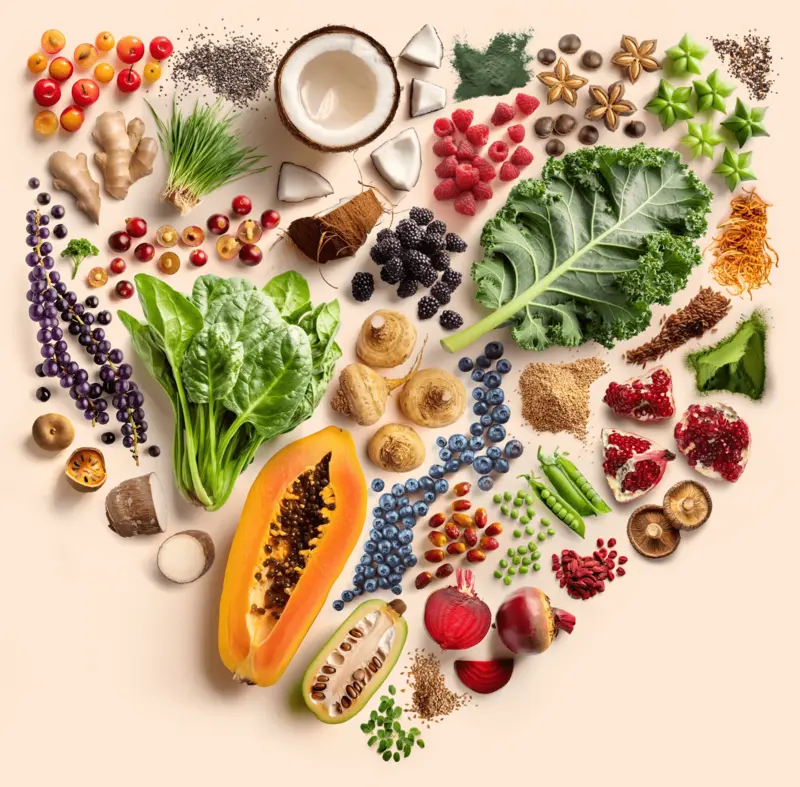
The trouble is that a meal is not a calorie delivery system. It is a bundle. When you take the bundle out, the calories leave, and so does everything that was riding along with them: the protein, the fiber, the magnesium, the B vitamins, the trace minerals nobody thinks about until a blood panel mentions them.
Only one half of that subtraction was intentional.
And here is the part that turns this from a truism into arithmetic you can actually check. Pick up any packaged food and look at how the panel is built. Calories are stated for the serving. Every percentage next to a vitamin or a mineral is a percentage of a daily figure. Ka’Chava’s own label carries the standard footnote at the bottom:
The % Daily Value (DV) tells you how much a nutrient in a serving of food contributes to a daily diet. 2,000 calories a day is used for general nutrition advice. Nutrition Facts footnote, kachava.com product page
Read that twice. The calorie figure describes the serving in front of you. The daily values describe the day. Nothing anywhere on that panel says the daily figure moves down when you decide to eat less. That asymmetry is the whole story, and it is printed on the side of every box in your kitchen.
The two scales on every Nutrition Facts panel
Calories
Per serving
A quantity of the food in front of you. It goes down the moment you eat less of it, which is exactly what you wanted.
% Daily Value
Per day
A share of a fixed daily figure. Eating less of the food changes how much of that share you collect. It does not change the share you needed.
Two different denominators on the same label, three lines apart. Almost every plan to eat better is built as though there were only one.
What actually leaves when a meal leaves
Try it as a ledger. On one side, the thing you meant to remove. On the other, the things that went with it whether you wanted them to or not.
What you meant to cut
Calories
The one quantity in the bundle that you were deliberately targeting, and the only one most people ever count.
What left with it
Everything else in the bundle
- Protein
- Fiber
- Fat, including the essential kind
- Twenty six vitamins and minerals
- Whatever was keeping you full until dinner
Nobody plans the right-hand column. It just happens, quietly, and it keeps happening every day the smaller plate is in effect. That is why the ambition on the ad Ka’Chava is currently running is stated as two halves rather than one:
Eat Less, Nourish More Ka’Chava, currently running on Meta
The first half is a decision. The second half is a design problem, and it is the one this article is about: if the volume of food is going down and the requirement is not, then the only variable left to move is how much nutrition each remaining calorie is carrying.
Part twoThe unit that matters is not calories. It is nutrients per calorie.
Density is an awkward idea because it is a ratio, and ratios do not fit on a front-of-pack claim. But it is easy to compute on any label you already own, and the whole method takes about twenty seconds.
The twenty second density test
- Divide the serving’s calories by 2,000. That is what the serving costs you, as a share of the day.
- Read the percent daily values the serving gives back.
- Anything above the number from step one is nutrition you bought at a discount. Anything below it, you overpaid for.
240 ÷ 2,000 = 12% The Ka’Chava serving spends an eighth of a day’s energy budget. Everything after this is what it returns.
Run it on the Ka’Chava panel. Two scoops, 62 grams, come to 240 calories. Against the 2,000 calorie reference, that is 12 percent of the day’s energy. Now here is what those 12 percent give back, every bar taken directly from their published panel.
What 12 percent of a day’s calories returns
Percent Daily Value delivered by one 240 calorie serving. The vertical line marks 12 percent, the share of a 2,000 calorie day those 240 calories cost. Every bar to the right of the line is nutrition bought at a discount.
Source: Nutrition Facts panel published on kachava.com for the 15 serving Superblend Shake. Percentages are the brand’s own; the 12 percent line is 240 divided by 2,000.
Twenty seven of the twenty eight lines on that panel come back above the line, most of them several times over. Biotin returns 250 percent of a day. Molybdenum, 220. Vitamin B12, 130. Twelve more sit at 60 percent or higher. The serving spent an eighth of the day’s energy and returned most of a day’s micronutrients.
The two lines that do not flatter the product
Potassium
4% per serving
Well below the 12 percent the calories cost. A Ka’Chava shake is not where your potassium is going to come from, and the panel does not pretend otherwise.
Sodium
13% per serving
Roughly what the calories cost, which is the direction you want on the one line of a panel you are usually trying to hold down rather than fill up.
A density test is only worth running if you also read the lines that come back short. These are the two.
One serving, from their panel
0
calories, two scoops, 62 grams
0g
protein, 45 percent of a day
0g
fiber, 21 percent of a day
0
vitamins and minerals
0+
superfoods, nutrients and plant based ingredients
0g
added sugars, out of 7g total

The trap: replacing a meal with one nutrient
Once you accept that density is the variable, the obvious move is to reach for the densest thing in the cupboard. For most people that is a tub of protein powder, because protein is the nutrient the last decade taught everyone to count.
Protein is a good thing to count. It is just not a meal. Ka’Chava makes this point about its own category on its comparison page, which is an unusual thing for a company to publish:
even with the cleanest protein powder, you’re only getting meaningful levels of one nutrient Ka’Chava, kachava.com comparison page
Their page goes on to say the same thing about the two other shortcuts. Greens powders are “far from filling or a balanced source of nutrition” and carry only one macronutrient. Generic meal replacement powders, in their words, “may not contain enough protein and fiber to fill you up” and often lean on fillers like maltodextrin.
Protein powder
- High protein
- Few other nutrients
- Does not replace a meal
- Only one macronutrient
Greens or superfood powder
- Some vitamins, minerals, antioxidants
- No or low protein
- Not filling, small serving
- Only one macronutrient
Generic meal replacement
- All three macronutrients
- May lack the protein and fiber to fill you up
- Ingredient quality varies, fillers common
Ka’Chava
- 85+ superfoods, nutrients and plant based ingredients
- Protein, fiber, greens, omega 3s, probiotics, adaptogens, antioxidants
- 26 vitamins and minerals
- Built to replace a meal
Every line in this comparison is Ka’Chava’s own wording, condensed, from kachava.com/compare.

That is the theory. What makes it worth reading is that a customer described living through it, unprompted, in a review posted this month.
“I first used Ka’chava for meal replacement, not realizing how much better it makes it feel until I took a break and focused more on protein with protein powder. My energy and mental energy dropped significantly and I finally realized it was because of the switch. As soon as I restarted Ka’chava, all was well again.”
Margot S. Verified Buyer · August 4, 2026
She ran the experiment in both directions, which is more than most of us do. She swapped a dense meal for a single nutrient, felt the difference, and swapped back. The calories were roughly handled either way. The bundle was not.

Where the density actually comes from
A number on a panel has to come from somewhere. In this case it comes from a long ingredient list organised into four blends, all of it printed in full on the product page rather than hidden behind a proprietary label.
The protein is plant based and split across sources: yellow pea, brown rice, organic sacha inchi, with coconut milk and oat milk carrying the texture. The fiber and probiotic side brings acacia gum, flax, organic amaranth, organic quinoa, chia, chicory root, five digestive enzymes and two named probiotic strains. The greens and superfood blend is the long one, and it is where most of the micronutrient percentages in the chart above are actually coming from: spinach, kale, chlorella, spirulina, barley grass, wheat grass, moringa, beet root, camu camu, acai, maqui, goji, baobab, pomegranate, four organic mushrooms and a dozen more.
The four blends, as printed on the bag
Plant proteins and plant milks
The 25g
Yellow pea protein, brown rice protein, coconut milk, oat milk.
Fiber and probiotics
The 6g
Acacia gum, flax seed, organic amaranth, organic quinoa, chia seed, soluble corn fiber, chicory root, five digestive enzymes and two named probiotic strains.
Greens and superfoods
The percentages
Organic sacha inchi, maca root, acai, beet root, chlorella, spirulina, spinach, kale, camu camu, maqui, goji, baobab, moringa, barley grass, wheat grass, four organic mushrooms, pomegranate, ginger and more.
Plant creamer
The texture
Coconut oil, cassava root, xanthan gum, guar gum, medium chain triglycerides.
Reproduced from the ingredient statement published on kachava.com. Nothing here sits behind a proprietary blend.



Eighty five plus ingredients is a marketing number in the sense that nobody counts them at breakfast. It is also the mechanical reason a 240 calorie serving can return 80 percent of a day’s vitamin A and 70 percent of its selenium. You do not get there from one plant.
Part fiveFullness is what decides whether you actually eat less
There is a second failure mode in the eat-less plan, and it has nothing to do with vitamins. A lighter lunch that leaves you hollow at three in the afternoon is not a lighter day. It is a lighter lunch followed by whatever is nearest.
This is where the two macronutrients most often left out of a shortcut do the work: protein and fiber. The Ka’Chava serving carries 25 grams of protein, 45 percent of a day, and 6 grams of fiber, 21 percent of a day. For comparison, those are the two lines their own comparison page flags as missing from the alternatives.

“Satisfying, creamy, no weird aftertaste.”
Doray W. Verified Buyer · July 27, 2026

The taste question is not a side issue either. A dense meal you dread is a dense meal you stop having. Ka’Chava says it spent over ten years flavor testing before it was happy, which reads like brand copy until you notice how much of the review page is people arguing about flavors rather than about whether the thing works.
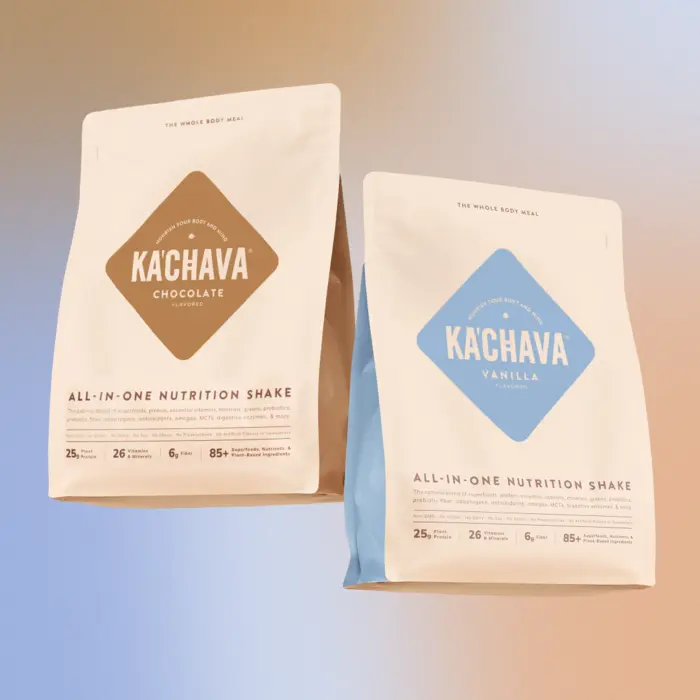
What is deliberately not in it
Density arguments usually stop at what a product contains. The subtraction on the other side matters too, particularly if the shake is going to be a daily habit rather than an occasional one.
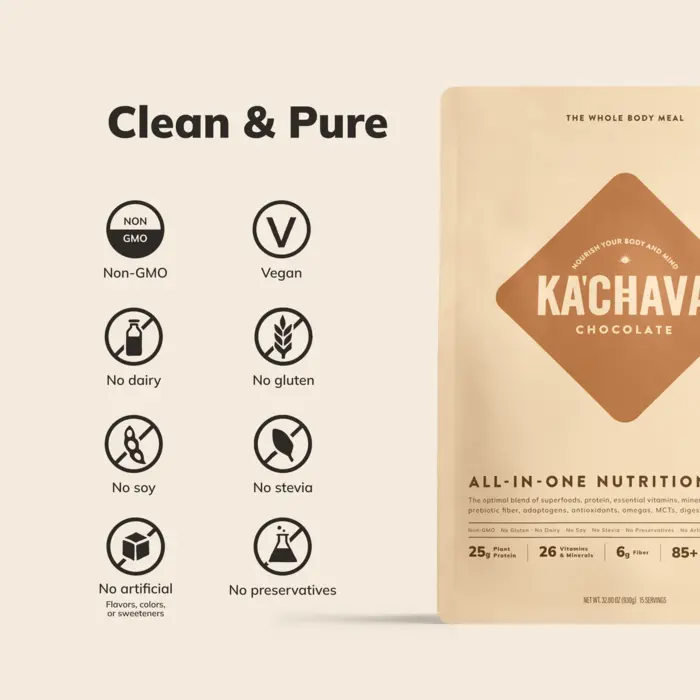
Ka’Chava publishes the exclusions plainly: no animal products, no gluten, no soy, no dairy, no artificial sweeteners, flavors or colors, and no preservatives. Sweetness comes from organic coconut nectar and lo han guo fruit extract, and the panel puts total sugars at 7 grams with 4 grams added. They also state that each ingredient is tested through certified, accredited third party labs.
The price objection, taken seriously
The most useful review on the Ka’Chava site is not a five star one. It is this, posted in August, and it is the objection anyone honest has to answer:
“Great product, but a bit pricey. I love the taste of Ka’chava, but it is a bit pricey compared to other clean protein powders out there.”
Patti J. Verified Buyer · August 2, 2026
She is right on her own terms, and the comparison she is making is the one this whole article is about. Against a tub of protein powder, a shake carrying 26 vitamins and minerals is going to cost more, because it is not the same object. The comparison that decides it is not against powder. It is against the meal the shake is standing in for.
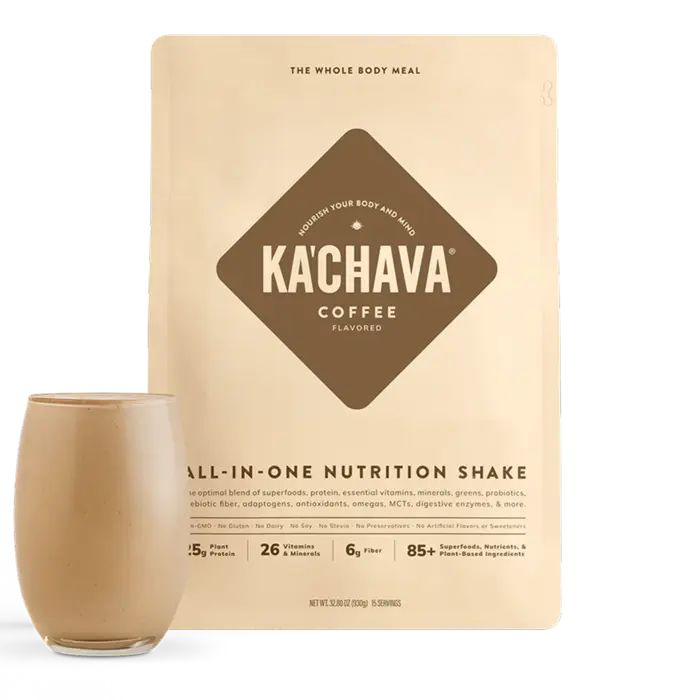
What the brand publishes about cost
Figures as published on kachava.com. The brand is currently running an ad that states the same thing in its own words: All-In-One for Just $3.99.
Whether four dollars is expensive depends entirely on what it replaces. Against a protein shake, it is expensive. Against a bought lunch, it is not. That is the actual comparison, and it is the one the eat-less plan was making in the first place.
Part eightWhat 92,000 people said about it
The review page carries an average of 4.5 across more than 92,000 reviews, of which 67,460 are five star. That is a large enough sample that the interesting part is not the average but the shape underneath it.
The full distribution, not just the average
Every rating published on the Ka’Chava review page, including the ones the brand would rather not have.
Source: the star rating filter on kachava.com/reviews, read on August 13, 2026. The five counts add up to 92,866 and average to 4.46, which is where the published 4.5 comes from.
Roughly one review in twenty five is a one star. That is worth knowing before you spend forty dollars, and it is worth more than a rounded average, because a product that is genuinely divisive and a product that is quietly mediocre can post the same 4.5.
“I have been drinking Ka’Chava protein shakes for years. My favorites are Chocolate and vanilla. As a vegan it can be challenging to get enough protein. I have a Ka’Chava shake every night, often for dinner. Recently quite a lot of other brands have come out with a high protein vegan shake. I have tried at least 3 of them. Nothing compares to the healthy goodness of Ka’Chava.”
Marianne C. Verified Buyer · August 1, 2026
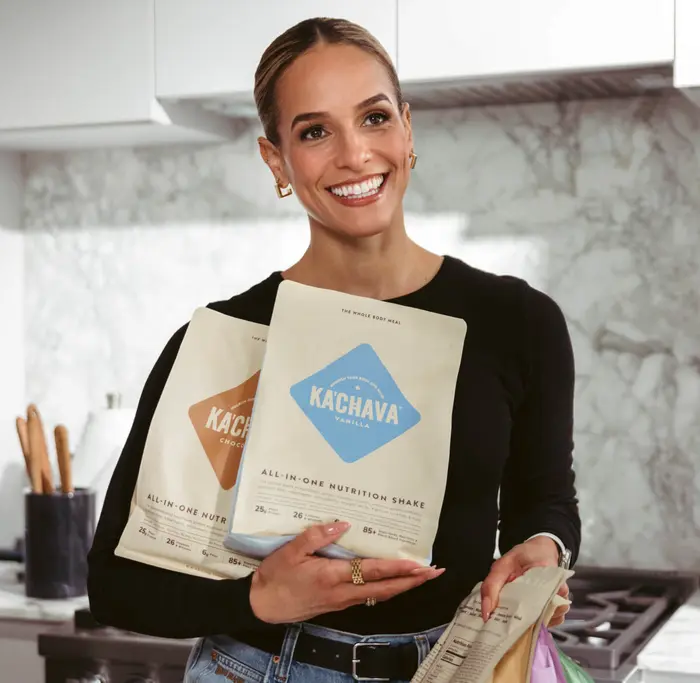
“Great flavor! We really like the chocolate mint. My husband likes it so much he does not want to try any of the other flavors.”
Rochella T. Verified Buyer · August 8, 2026

Eat less is a decision. Nourish more is a specification.
You do not need a shake to eat less. You need a plan for the half of the subtraction you did not intend, and the only lever that half responds to is density: more nutrition riding on each remaining calorie.
That is a spec, and specs can be checked. Divide the calories by two thousand. Read the percentages that come back. If they beat the share of the budget they cost, the food is doing the second half of the job. On the Ka’Chava panel, twelve percent of a day’s energy returns twenty seven of twenty eight lines above the line, twelve of them at 70 percent or more.